

What do you feel?
We’ve made an irreversible mistake, ruined our lives and the child’s life. We’ll have to give them back, and the authorities and our loved ones will never trust us again
What is actually happening?
The rose-colored glasses have come off, and the stress of the adjustment period is overwhelming both you and the child, making it hard to think rationally. But this turbulent phase will pass, and you will regain the ability to reflect clearly. Only from that point is it possible to make a balanced decision, whatever it may be
Important note:
Give yourself and the child time to adapt to the new circumstances, and don’t hesitate to ask for help. You are going through unprecedented changes in your family — a fundamental sphere of every person’s life
When a child who has been left without the care of their biological parents arrives into your family, it is always a significant and responsible event. The stages and conditions of this process may vary depending on the laws of the country you live in, but all adoptive families around the world share one thing — this journey is never easy, and every family will face its own set of unique challenges. We have prepared answers to the most uncomfortable, difficult, and sensitive questions about adoption.
Stages of adaptation in a new family
It does not matter whether you are an experienced parent or this is your first adopted child — every family goes through characteristic stages of adapting to a new member. Let’s revisit them:
“Honeymoon”
Duration: Several weeks
Behavior: Both sides try to behave perfectly. The child tries to be “easy,” affectionate, quiet, and to show gratitude. The parents feel joy and a desire to “rescue” the child. Conflicts are almost nonexistent; everyone behaves cautiously and tries to compromise.
What to be prepared for: Depending on the child’s past experiences, they may suffer from nightmares, fears, and other physical and psychological manifestations of stress in the new environment. Do not be alarmed if the child is afraid to fall asleep alone, refuses unfamiliar food, or does not follow hygiene habits they were not taught before. A separate individual has entered your home, with their own life history.
What should raise concern: Aggressive behavior, including self-harm. If a child attacks parents or other children, harms pets, attempts to start a fire, or intentionally injures themselves, this is a reason to immediately involve a child psychiatrist and notify child protection services.
“Crisis”
Duration: Several months
Behavior:The child and parents have become more accustomed to each other and begin to view their life together more realistically. The child starts testing boundaries. The euphoria fades, the rose-colored glasses come off, and difficulties begin.
What to be prepared for: Tantrums, mood swings, disobedience, verbal aggression. The child may break or tear their new belongings, lie, use offensive language, ignore school, and test the parents’ limits. At this stage, the child becomes aware of their vulnerability and, through their behavior, is essentially asking: “Do you really need me? If I am bad, will you still keep me?” Parents may feel exhaustion, doubt, guilt, irritation, and fear — especially when they hear, “Take me back to the orphanage, you are not my real parents, I don’t need you!”
What should raise concern: As in the honeymoon phase, any aggression that poses a danger to the child or others is unacceptable. Otherwise, remember that in just a few months the child may display a concentrated amount of misbehavior that, in other circumstances, would unfold over years. This is a normal stage that shows the child has begun to trust you enough to reveal their true self — not only their pleasant side.
“Adjustment”
Duration: From several months to several years
Behavior:Gradual reduction in aggression and attempts to reach compromises. The child learns to live by the family’s rules, while the parents begin to understand the reasons behind the child’s behavior. A sense of safety develops, and attachment begins to form.
What to be prepared for: The child may try to disrupt the family’s routine — changing sleep and eating schedules, refusing to participate in family activities or weekends together. It is important not to break off dialogue, but to calmly, kindly, and consistently explain the importance of following family rules. In non-essential matters, be flexible: if the child does not want to meet new relatives or eat certain foods, allow them to maintain their boundaries.
What should raise concern: If after a year in the family adjustment has still not occurred, it may be worth consulting a child psychologist. The path to closeness is individual for each child; in some families, mutual adjustment can take three years or even longer, especially if the child has experienced rejection before.
“Acceptance”
This is the long-awaited stage that makes all the effort, tears, sleepless nights, and emotional upheavals worthwhile. When it comes, you will not confuse it with anything else — the child is finally home not only physically, but emotionally as well. They consciously value their parents, trust them, and behave as if they have lived in the family their entire life.
The stress of adaptation fades, leaving room for creativity, growth, and plans for the future.
When something goes wrong
The scenario described above is a fortunate outcome, forged through the persistent efforts of an adoptive family raising a psychologically and physically healthy child. However, how you go through the adaptation period — and whether you go through it successfully at all — depends not only on you. A significant contribution to understanding the adaptation of orphaned children was made by Maria Chuprova, Ph.D. candidate in psychology.
As a result of many years of research, she determined that children’s personality traits can play a decisive role in their adaptation сценарий, and she identified five such scenarios, each corresponding to a particular type of personality.
What are these five scenarios?
Imagine a picture showing a child and their parent.
Between them there is a connection, which can be represented by two arrows: one goes from the child, another one goes from the parent. This reflects their attachment to each other.
If we imagine five such pictures, then:
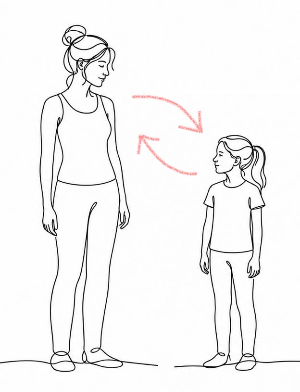
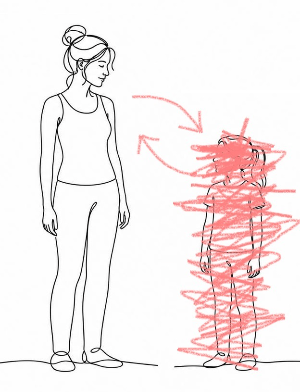
The first category includes children for whom the parent figure is effectively crossed out.
They may be quite well preserved intellectually and emotionally, perform well in school, and behave properly. They do not cause problems for caregivers, actively build relationships with peers, and may even help staff care for other children.
However, the image of an adult in their worldview is fundamentally damaged.
This phenomenon was first identified by Anna Freud: children in her residential care facility behaved like a single organism — they cried at the same time, went to the bathroom at the same time, did everything simultaneously. If one child was removed from the group, the others would lose their emotional stability until they were reunited. In the absence of a significant adult, such children preserve themselves by choosing their peers as their attachment figures.
When adoptive parents bring such a child into a family, they often discover that the child simply does not need them. The child does not see them as significant figures, does not recognize their authority, and does not form an attachment to them. Many families find it difficult to accept this indifference and end up returning the child. In fact, this category has the highest rate of returns to institutional care.
Does this mean such children are better off staying in institutions? No. If a child remains in an institution, they continue to be traumatized, since no significant adult ever appears in their life. In addition, they are constantly separated from their group, moved between temporary families and new institutions. As a result, they enter adulthood either with a severely diminished ability to form attachments, or—if they managed to maintain peer bonds—perceiving those peers as their family. Such individuals are at risk of being drawn into the problems of their peers or casual acquaintances, getting into debt under their influence, using psychoactive substances, and losing property.
If your child belongs to this category, it is important to provide psychological support focused on restoring the image of a significant adult. If possible and not too distressing, help the child reconnect with memories of their biological parents, using this as a foundation to rebuild their concept of family (be sure to consult a psychologist beforehand). Working with such children is very challenging and requires professional guidance and patience. It is important to remember that it is possible to restore a child’s ability to form attachment to an adult.
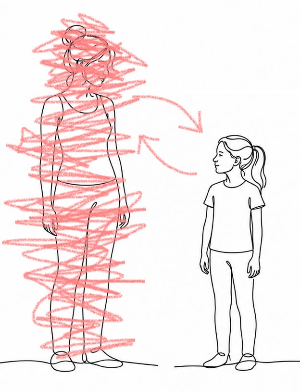
The second category includes children with a damaged sense of self.
In our picture, it is the child who would be crossed out.
These children are also psychologically and intellectually intact, but in response to stress their psyche has entered a state of “freezing” — similar to suspended animation in nature, when an organism withdraws from the outside world in order to survive difficult times.
While in institutional care, these children often appear the least appealing to prospective parents — they may be underweight, have autoimmune conditions, struggle academically, show little engagement in play, and frequently lag behind in development. However, their internal picture of family remains largely intact, and once adopted, after waiting in this “frozen” state, such children often begin to flourish rapidly — they start to grow, catch up with their peers in school, develop interests and hobbies, and doctors may even withdraw previously assigned diagnoses.
If such a child remains in an institution, their condition tends to progressively worsen, potentially leading to diagnoses for which they had no prior predisposition.
If your child belongs to this group, you can consider yourself fortunate. Surround them with attention and care, and they may surprise you with their transformation.
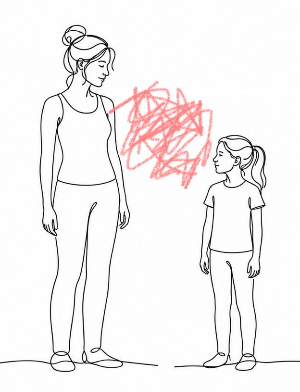
The third category includes children whose connection with adults is disrupted.
In the picture, only the arrows — the relationships — would be crossed out.
These children understand the role of an adult in a child’s life, but they lack experience in building deep, stable relationships with a parent. As a result, they internalize a core belief: “an adult is a function.”
If you have visited orphanages, you have likely met such children — they quickly make contact, immediately call a stranger “mom” or “dad,” hug them, and ask for gifts.
When such a child enters a family, it takes a great deal of effort for their need for attachment to become focused and deep toward their caregiver. Working with such a child is challenging both for the family and for adaptation specialists.
There is a view that adults should refrain from giving material gifts when visiting orphanages — such gifts do not stay long in children’s hands, but they can create distorted expectations and misunderstandings about relationships. If you want to do something meaningful for children in institutional care, it is better to share practical skills that will be useful in real life: talk about financial literacy, career choices, household management, psychology, and interpersonal communication — in other words, the kinds of things children typically learn in a family (and topics which you have expertise in). In most of the cases, institutions are supportive and willing to help organize volunteer workshops.
The fourth groupincludes children whose psyches were unable to cope with the upheavals in their lives.
In the picture, the child, the parent, and the connections between them would all be crossed out.
This is a case where children very quickly cease to be intact intellectually and mentally; in the institution they develop progressive, irreversible disorders.
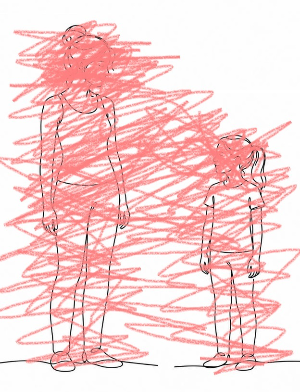
These children rarely end up in families, but when they do, their rehabilitation requires extraordinary efforts from both caregivers and specialists. It is very difficult to make a prognosis for their adaptation; however, being in a family can at least give them some chance at a normal life. If they remain in institutional care, these children are often destined for the progression of their condition and eventual transfer to adult neuropsychiatric institutions.
The last category includes children who, despite everything, manage to preserve their sense of self, their image of a close adult, and their ability to build healthy relationships with adults. In their case, nothing in the diagram would be crossed out.
It is important for such a child to be placed in a non-authoritarian family where they are allowed to develop freely. These children are often creative, gifted, and possess strong inner resilience; they value freedom and respect for their individuality.
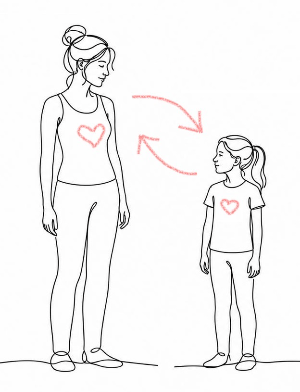
Long stays in an orphanage are unfavorable for them, because such children resist the rules, try to fight the dehumanizing system, and are very difficult for caregivers to manage, since staff do not have the time or ability to give them the attention they require
If such a child ends up in your family, the prognosis for their adaptation is very favorable.
So, we have established that the child’s personality type decisively affects the prognosis for adaptation — but what should be done when the problems that arise during the adaptation period turn out to be insurmountable?
Reality has not lived up to my expectations
The most important thing right now is to take a breath and allow yourself to be an imperfect person and an imperfect parent.
If your family is going through an adaptation crisis with a psychologically healthy child, remember: paradoxically, unbearable behavior right now is a sign that things are actually going well, and that the child has finally relaxed and allowed you to see them exactly as they are in their full complexity, without embellishment.
If the child’s behavior remains uncontrollable, they try to harm themselves or others, ignore behavioral norms, reject requests, or deliberately damage your property, it is time to consult a child psychologist or psychiatrist. Take the time to find an experienced specialist, preferably someone who has already worked with adopted children. Do not be afraid of this kind of professional involvement in your family — it is neither shameful nor frightening. The sooner you take this process under control, the easier it will be to get through the crisis.
Sometimes, at some stage of adoption, you may feel emptiness or burnout and feel unable to continue this path. It is important not to stay alone with your anxiety, shame, and disappointment, and to talk about your feelings with a psychologist, family therapist, or caseworker from child protection services (if your country provides psychological support for adoptive families). Do not be afraid of seeming cruel or heartless — professionals who work with adoptive families are very familiar with these feelings, since new parents regularly experience disappointment in adoption, and your thoughts will not shock a therapist. You can also find a list of free psychological support centers online.
Our family and close ones do not approve of our decision
Another important factor that affects attitudes toward adoption is the reaction of the people around you. It is good if your loved ones share your values and can support your family on the adoption journey, and listen without judgment when things get difficult. However, your parents, extended relatives, children already in the family, friends, and colleagues may think differently, and that is normal.
In most countries, there are strict requirements for adoptive families, but regardless of the law, it is important that you approach adoption with a firm intention to welcome a new family member, have financial independence from relatives, and have your own living space — a place where you set the rules. Do not try to persuade those who disagree with your choice, but do not let yourself be mistreated either; you have the right to distance yourself from people if their judgmental remarks hurt you and the child.
If there are already children in the family, make sure to discuss adoption with them in advance, because they are full members of the family and the arrival of a new person will inevitably take some of your attention away from them. Adoption should be postponed or reconsidered if your child firmly does not want a new brother or sister in the family. If conflicts between the children begin after the new child arrives, be sure to consult a family psychologist before the problem seriously harms the family’s emotional well-being, since children from orphanages are used to handling conflict differently from children raised at home. Above all, none of your children should feel that they are suddenly loved less because of the new child.
I don’t understand my child
The psycho-emotional and social development of orphaned children follows a different pattern from that of children raised at home, so it is impossible to impose the same demands and expectations on them.
The main difference between children from orphanages is that they almost always have attachment issues. Why does this happen? A child raised at home gets used from the very first days of life to how sensitively the mother responds to their behavior and how quickly she tries to meet their needs — feeding them, bathing them, putting them to sleep, soothing their crying, singing to them, rocking them in her arms, with all her attention focused on them. The needs of infants in orphanages are also met, but the staff’s attention is incomparable to a parent’s, and often the child receives the necessary care only after crying and falling asleep alone. From infancy, the child becomes accustomed to feeling unwanted. As the child grows, this attachment disorder manifests itself in anxiety, difficulties with adjustment and building relationships, behavioral problems such as aggression and self-harm, and delays in psycho-emotional development.
But love alone is not enough to shape a personality; raising children is an educational process that requires effort from everyone involved.
Outside the family, a child often has no one to look up to, no source from which to learn social and communication skills, and no significant adult figure under whose protection they can stand firmly, take initiative, try new things, create, make mistakes, and build their own personality. In orphanages, the “adult–child” relationship is built in an authoritarian way, and children live in a closed social world of peers with similarly difficult backgrounds. This can lead to them not learning how to solve problems together, choose ways and means of meeting their needs, understand what they want, or resolve conflicts without violence.
Another problem is the habit of waiting for help from others — caregivers, the state, or charities — which deprives orphans of the skill of taking responsibility for their own lives.
An adoptive parent faces a difficult task: to accept and raise a person whose internal mechanisms have been subjected to an unbearable burden for their age — first the biological parents failed, then the orphanage did not satisfy their emotional hunger, and if they have already been in foster care, they also have experience of relationship breakdown. So you have to move forward by trial and error, gradually uncovering new wounds and traumas in a little person who may not yet be ready to face them.
The adoptive child is also doing enormous work — rewriting their behavioral patterns in order to get to know the surrounding world from scratch through their new parents, or, on the contrary, rebelling against it.
On this path, your child is confused. They need to learn trust, to follow new rules, they have left behind those who were close to them in the orphanage, they are entering a new school, they fear your anger and rejection, and they also fear the new life they once dreamed of. Do not lose sight of the fact that literally their whole world has just been turned upside down — and not for the first time.
A person who had a happy childhood may find it impossible to understand what an orphan has gone through, but that is no reason to be overwhelmed by pity. An adoptive parent needs to act rationally and consistently.
Are these problems unique to us?
No, every family has its own set of problems and worries. We spoke with several adoptive parents, and here are their stories in shortened form:
Spending so much energy on raising and socializing our son is exhausting. He has serious behavioral problems and difficulties at his new school; he has skipped class several times and wandered around the city for days until the police brought him back. There were and still are no behavioral specialists either at the school or in the orphanage. The teachers blame us and think that, as parents, we are failing to cope with his outbursts of aggression and lack of control. We are losing heart, but this is only the first year in the family, and we want to believe that things will get easier. If we can’t correct his behavior, we may have to switch him to home schooling under closer supervision, and that would certainly harm his socialization — which means we’d end up in a vicious circle. My husband and I do not lose hope of raising him to be a decent person and giving him the warmth and comfort of a loving family. When our son throws tantrums or runs away, I want to save him with my love, but my husband is stricter; sometimes we argue about this, although I understand that our son needs discipline and a strong male role model. Since the child arrived, our relationship with my husband has been severely tested, but in the hardest moments we still find support in each other.
Two foster children have already passed through our family. Our son has grown up and lives separately now, and our daughter is currently 15. With our son, things were very difficult — at times simply unbearable — especially during the teenage crises. The neighbors complained about us, he regularly got into fights at school, and twice ended up in police custody. Now we are going through almost the same thing with our daughter, though in a milder way (or maybe we have become more experienced?). There was despair, anger at ourselves and at the child, and the desire to throw everything away, get into the car, leave home, and never come back. Our parents practically turned away from us; they said, “Why do you need this? You’re just wasting your nerves on someone else’s genes.” What helped was the support of friends and forums for foster parents. In our region, relying on psychologists was not really an option.
I adopted a five-year-old boy two years ago. I was 38, and this was my first child — very long-awaited. I was endlessly happy and immediately completed the adoption procedure. Quite soon, I realized that something was wrong. Yes, I had been warned that because of his long stay in the orphanage, my son was slightly developmentally delayed, and that this would soon change with proper care. I believed it because I wanted to believe it, and besides, I had nothing to compare his behavior to.
More than half a year passed, but my son still had not caught up developmentally with children his age, despite all my efforts. At six years old, he could barely handle tableware, spoke very little and unclearly, and was not progressing beyond the level he had reached in the orphanage. I quit my job and devoted myself entirely to caring for my son and supporting his development. Alongside maternal instinct, it was also a professional challenge for me as a teacher.
Fortunately, I also had the opportunity to hire a speech therapist and a developmental specialist who came to our home several times a week. Despite all our efforts, nothing changed. My son was not learning skills and seemed somehow “frozen.” At six years old, my child officially received several neuropsychiatric diagnoses and a disability status. By that time, my dreams of a happy family had simply been shattered, and I was morally crushed and physically exhausted.
What I struggle with especially acutely is that I had to leave behind a successful and beloved career. Although I receive benefits and support from the state, my standard of living has dropped dramatically. But most importantly, I lost my main social circle — my colleagues.
I feel emptied out and completely alone in my problems. My sense of responsibility does not allow me to turn back, but I am not moving forward either; my life has frozen just as my child’s inner world has frozen. Even in my worst nightmares, I could never have imagined that this would become my life.
Our daughter did not come to us from an orphanage, but from a dysfunctional family. She spent only a short time in a children’s center. We love our N. very much, but her experiences during the first years of her life with dysfunctional parents are a major challenge for us. Her parents used drugs and treated N. and another child cruelly; that other child is no longer alive. Both parents are now in prison and have been deprived of parental rights.
We are working with a therapist to stabilize her emotional state. She suffers from nightmares and constant anxiety, is afraid of adults and loud noises, and is afraid to leave her room when guests come over. She also shows obsessive-compulsive tendencies. It is especially difficult to talk about her biological family, because she still has vivid memories of her mother and father, whom she misses deeply despite everything.
It is a difficult journey, but we will definitely get through it for her sake.
Where to look for support
A family usually does not need just one kind of “general help,” but several kinds of support at once: medical, psychological, behavioral, parental, legal, and organizational. The most useful starting points are centers that work with trauma, attachment, challenging behavior, developmental delays, and special medical needs.
Where to turn:
Trauma-informed psychologists and psychiatrists who understand the specific challenges of foster and adopted children. Find out whether the specialist works with issues such as early childhood trauma, attachment disorders, emotional regulation, aggression, withdrawal from contact, and night terrors.
Developmental specialists: pediatric neurologists, psychiatrists, speech therapists, occupational therapists, special education specialists, neuropsychologists — depending on the country and terminology of the system. Look for professionals experienced with developmental delays, sensory difficulties, and the consequences of early adversity.
Adoption-competent therapists / adoption-competent services — this is a key phrase when you need a specialist who specifically understands adoptive families, rather than only general child psychology.
Parent support groups: online or offline communities for adoptive and foster families, as well as support groups for families raising children with health or developmental challenges. Such groups help not only emotionally, but also with practical advice about school, paperwork, treatment, and crises.
Educational programs for parents focused on trauma and attachment, such as Trust-Based Relational Intervention approach, trauma-informed parenting training, and Attachment-Based Parenting. These can be especially useful when a child’s behavior cannot be explained by ordinary parenting issues and conventional methods do not work.
Local adoption and family support organizations: they often provide consultations, referrals to specialists, support groups, hotlines, and guidance toward available services. Contact information for such organizations is usually available through local child welfare authorities.
Charitable organizations and specialized foundations for children with disabilities, rare diseases, or complex medical needs. These organizations can often help families navigate treatment, rehabilitation, and financial assistance.
Hotlines and crisis centers: both free and paid services.
I feel that I want to return the child
In particularly difficult moments of adaptation, such thoughts can feel like a form of salvation, and it is impossible to judge yourself or others for having them.
The desire to give up an adopted child is usually caused by problems such as these:
Previously unknown diagnoses come to light
Sometimes it turns out that the child was insufficiently examined while in institutional care and has a psychiatric disorder that makes family life unsafe, or a combination of diagnoses for which the family is unprepared psychologically, physically, or financially. The most common issue is developmental delay — every second adoptive family encounters it.
The reality of adoption turned out to be harder than expected
When a child with attachment disorder joins a family, parents may realize that it was not they who filled the child’s life with the spirit of a loving family, but rather that the child brought the atmosphere of an orphanage into their home — tension, distrust, deception, and emotional distance begin to appear. Parents end up functioning as caregivers, while the child may perceive their emotions as weakness.
Lack of outside support
It is good when a family is accompanied by a team of specialists throughout the adoption process, but this is more the exception than the rule. More often, teachers, doctors, and psychologists are poorly informed about the specific needs of adopted children and lack either the skills or the willingness to work with them. For children with special needs, it can be impossible to find rehabilitation options regardless of where the family lives or their level of income, which leads to parental burnout.
Behavioral problems during adolescence
Teenagers are very often returned — even after 10–12 years in a family. This is connected to the escalation of aggressive and socially dangerous behavior during adolescence. It is important to clearly distinguish between normal teenage rebellion and pathology.
Sexualized behavior toward other children in the family
This is the most difficult case. If your adopted child demonstrates unhealthy behavior toward other children — engages in age-inappropriate sexual conversations with siblings, touches them intimately, or coerces them into sexual activities — your first priority must be ensuring the safety of the other children. Unfortunately, such behavior does not come from nowhere, and a child displaying sexualized aggression has most likely experienced or witnessed abuse themselves. You are obligated to notify child protective services about what is happening and then act in accordance with the laws of your country.
Assess your own capacity carefully: you have every right either to commit yourself to the child’s psychological and psychiatric rehabilitation or to return the child in order to protect your family. Whatever decision you make, remember that the safety of your children comes first.
In conclusion
According to data from various sources, between 10% and 30% of children are returned to orphanages.
Almost all parents go through doubts about whether they made the right choice, and if you are unable to cope with the responsibilities you have taken on, misjudged your capacity, or the burden turns out to be heavier than expected, do not hesitate to speak about it with child welfare authorities and your loved ones, and ask for help. It is wonderful when adoption brings happiness to the entire family, but things do not always turn out that way.
Returning a child to the foster care system is an incredibly difficult decision, often accompanied by guilt and social stigma. But if truly serious obstacles arise on the path of adoption, you are not obligated to destroy yourself and your family in pursuit of this unattainable, even if noble, goal.